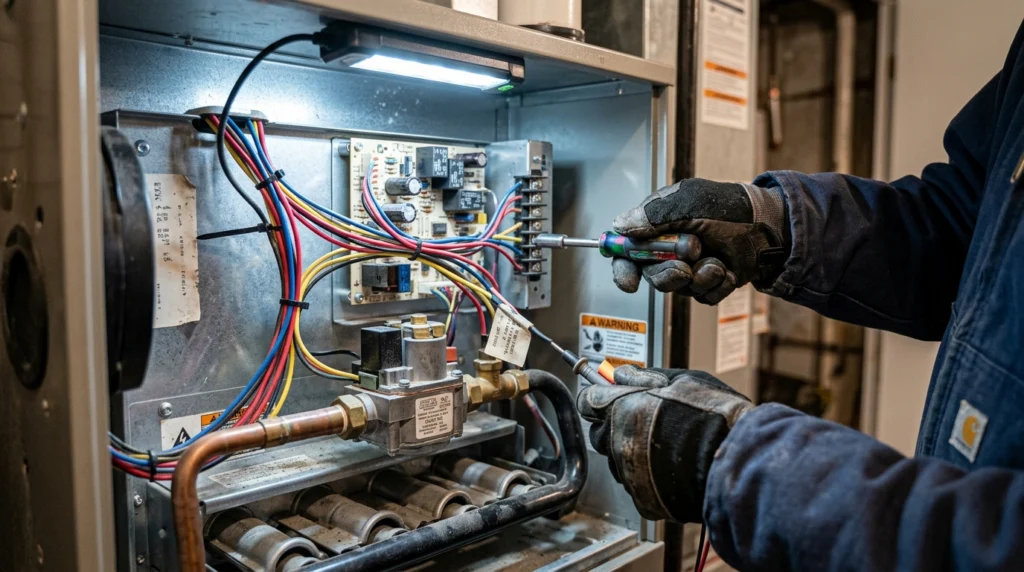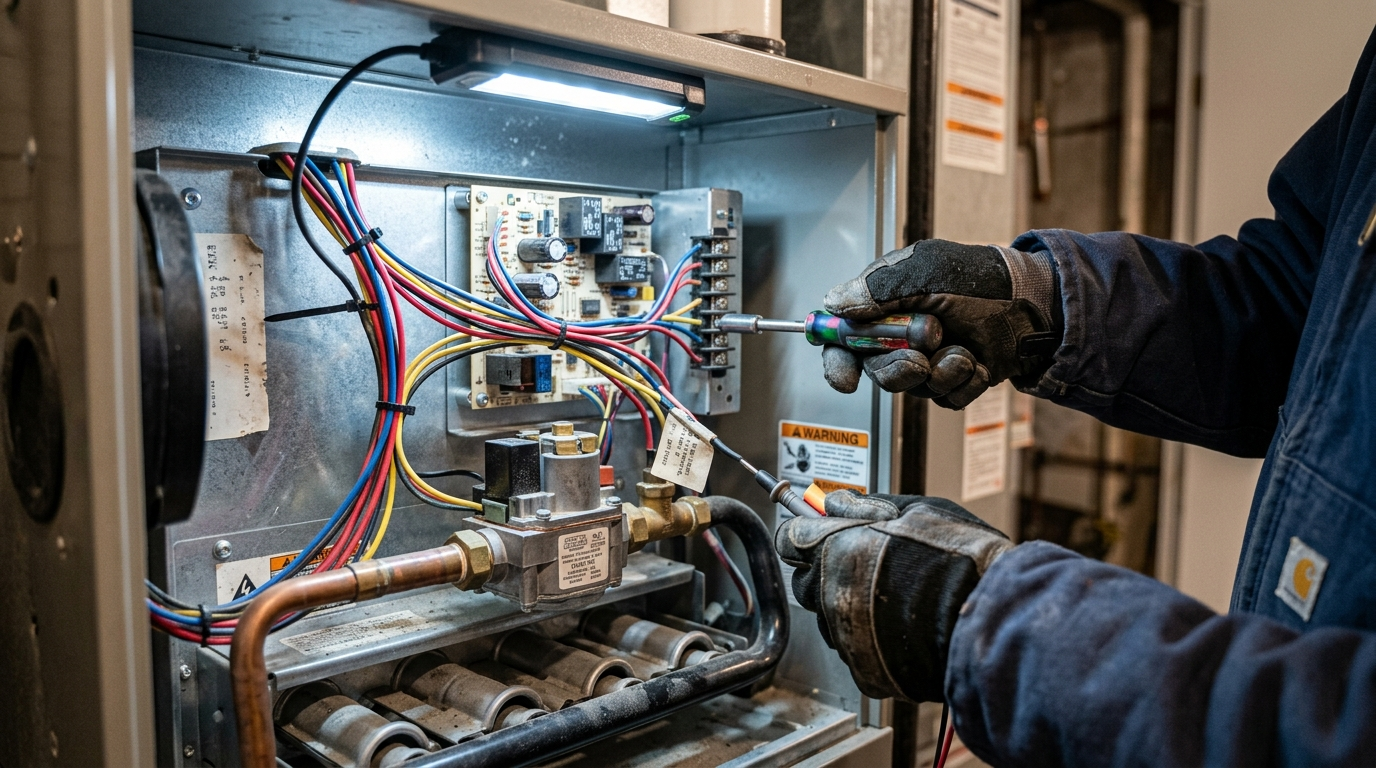
A furnace tune-up typically includes inspecting safety controls, checking ignition and electrical components, evaluating airflow, cleaning applicable parts, and testing heating performance. For gas furnaces, technicians also examine combustion-related components and venting. The appointment should end with an explanation of your furnace’s condition and any recommended repairs.
At Lenz Heating & Cooling, our HVAC Service Agreement includes a 28-point system inspection to help identify potential problems before they interrupt your heating.
Your Technician Should Understand How Your Furnace Has Been Running
A good furnace tune-up starts before anyone opens the equipment cabinet.
Your technician should ask whether you’ve noticed anything unusual. Maybe the furnace has been making a new noise, the upstairs bedrooms aren’t warming up like they used to, or your heating bills seem higher than last winter.
Those details matter.
Your furnace might start and produce heat without any obvious problems, but that doesn’t mean every component is operating as it should.
Telling your technician what you’ve noticed gives them a better idea of where to pay attention during the inspection.
What Actually Gets Inspected, Tested, and Cleaned?
This is where most of the work happens.
A professional furnace tune-up involves several types of maintenance, each serving a different purpose.
| Type of work | What’s typically involved |
| Safety inspection | Checking applicable safety controls, accessible heat exchanger surfaces, and gas connections |
| Ignition and combustion | Evaluating burners, ignition components, combustion performance, and venting on gas furnaces |
| Electrical testing | Checking wiring, connections, motors, and system controls |
| Airflow evaluation | Inspecting the air filter, blower operation, and heating airflow |
| Cleaning and adjustments | Cleaning applicable accessible components and making adjustments as needed |
| Performance testing | Confirming that the furnace starts, heats, and shuts down correctly |
The exact work depends on your equipment and the maintenance service you’ve scheduled.
Why Do These Checks Matter?
Consider something as simple as restricted airflow.
Your furnace may still heat the house, but a severely clogged filter or airflow problem can contribute to overheating and unexpected shutdowns.
Likewise, a worn ignition component might work today but begin causing unreliable startups later.
For fuel-burning equipment, safety checks are particularly important. The CDC recommends annual heating system maintenance by a qualified technician to help reduce risks associated with carbon monoxide and improper venting.
Does Every Furnace Get the Same Tune-Up?
Not exactly, and that’s important for Central Iowa homeowners.
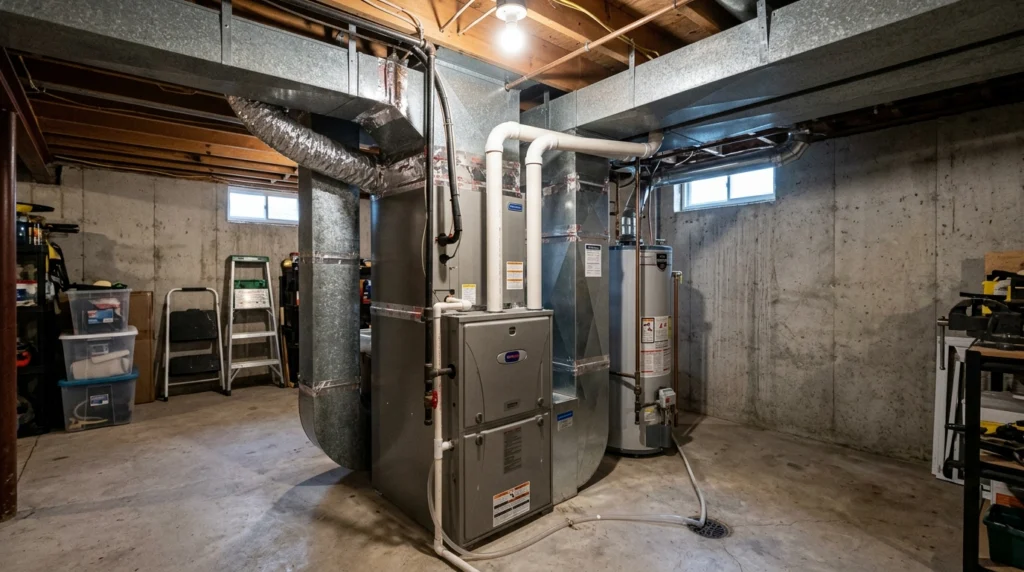
An older gas furnace in a Des Moines basement may have different inspection needs than a newer high-efficiency furnace in Ankeny or Waukee.
For example, older equipment may require closer attention to aging components and exhaust venting. High-efficiency condensing furnaces have additional considerations, including condensate drainage and intake and exhaust piping.
Those differences become particularly relevant when Iowa temperatures drop below freezing.
A proper furnace tune-up should account for the equipment you actually have, rather than treating every heating system as identical.
What’s Not Typically Included in a Furnace Tune-Up?
This is worth understanding before scheduling an appointment.
A routine tune-up generally doesn’t include:
- Replacing major components or repairing failed parts
- Extensive duct cleaning or ductwork modifications
- Replacing the furnace’s heat exchanger
- Correcting significant gas-line or venting problems
- Additional repairs outside the agreed maintenance scope
Even routine items, such as replacement air filters, may be handled differently depending on the service package.
If your technician identifies a problem, that doesn’t automatically mean you need to approve an expensive repair.
Sometimes the issue is relatively minor. Other times, a component may need replacement or a more involved evaluation.
Either way, you should understand what’s wrong, how urgent it is, and what additional work will cost before making a decision.
If you have no heat or suspect a safety problem, tell the company when scheduling. You may need a diagnostic repair visit instead of routine maintenance.
What Should You Know Before the Technician Leaves?
A furnace tune-up shouldn’t end with someone simply telling you everything looks fine.
You should come away understanding what the technician found.
Before the appointment wraps up, ask:
- What was checked? Which inspections, tests, and cleaning tasks were completed?
- Did anything stand out? Were there signs of wear or developing problems?
- Does anything need repair? Is it urgent, or can it be monitored?
- What happens next? Are there filter changes or other maintenance tasks you should handle?
At Lenz Heating & Cooling, we believe homeowners should understand their options rather than feel pressured into unnecessary work.
Our HVAC Service Agreement includes scheduled maintenance visits and a detailed 28-point inspection. For homeowners who prefer ongoing maintenance, it’s one way to keep service appointments on the calendar without having to remember when they’re due.
Frequently Asked Questions About Furnace Tune-Ups
How long does a furnace tune-up take?
Most residential furnace tune-ups take approximately 45–90 minutes. The actual time depends on the furnace’s condition, accessibility, and inspection requirements.
Do I need to be home during a furnace tune-up?
It’s generally helpful to be available, especially at the beginning and end of the visit. The technician may need access to the furnace and thermostat, and you’ll have an opportunity to discuss any findings. Ask your HVAC company about its access requirements when scheduling.
Does a furnace tune-up include replacing the air filter?
Not always. Checking the filter is a common maintenance task, but whether a replacement filter is supplied and installed depends on the service package. Confirm what’s included when booking.
What if my furnace needs repairs during the tune-up?
Your technician should explain the problem and provide pricing before performing additional work. You can then decide whether to proceed, ask questions, or request further evaluation. Safety-related concerns may require the furnace to remain off until repairs are completed.
A Furnace Tune-Up Shouldn’t Leave You Guessing
When you schedule a furnace tune-up, you should come away knowing more about your heating system than when the technician arrived. That means understanding what was checked, whether anything needs attention, and what you can do to keep your furnace operating reliably.
Lenz Heating & Cooling has been helping homeowners throughout Des Moines and Central Iowa care for their heating systems since 2009. Our team focuses on thorough service, clear explanations, and recommendations that make sense for your home.
Ready to have your furnace checked? Call Lenz Heating & Cooling at (515) 225-6446 to schedule your furnace tune-up.