
Before turning on your heat for the first time, test your smoke and carbon monoxide alarms, check the area around your furnace, inspect the air filter, clear blocked vents, and review your thermostat settings. Then run the heating system and pay attention to unusual sounds, smells, or performance issues. Scheduling professional heating maintenance can also help identify problems before winter.
Around Des Moines, one afternoon can feel warm enough to leave the windows open, while the next morning has you reaching for the thermostat. These seven steps before turning on heat can help you avoid discovering a problem when temperatures suddenly drop.
1. Test Your Smoke and Carbon Monoxide Alarms
Before switching on a fuel-burning heating system, make sure your smoke and carbon monoxide (CO) alarms are working.
Test each alarm according to the manufacturer’s instructions and replace batteries or expired units as needed.
Carbon monoxide is particularly concerning because you cannot see or smell it. Fuel-burning furnaces can produce this dangerous gas if something goes wrong with combustion or venting.
Important: If your CO alarm sounds, leave the house immediately and call 911 from outside. Never ignore an alarm or assume it’s malfunctioning.
2. Check the Area Around Your Furnace and Vents
Basements and utility rooms often become storage spaces during summer.
Before running the furnace, check for boxes, laundry baskets, cleaning products, or other belongings crowded around the equipment. Keep combustible materials away and maintain the clearances specified by the manufacturer.
Then walk through your home and make sure furniture, rugs, and curtains aren’t blocking supply vents or return-air grilles.
Your heating system needs adequate airflow to operate properly.
3. Inspect Your HVAC Air Filter
Your furnace may have been sitting idle, but its air filter probably hasn’t.
If your central air conditioner uses the same ductwork and blower, the filter may have collected dust throughout summer.
Pull it out and inspect it. If it’s heavily coated in dust or debris, replace it with the correct size and recommended type.
A clogged filter can restrict airflow, reduce heating performance, and sometimes contribute to furnace overheating.
Quick tip: Write the replacement date on your calendar so you’re not guessing when to check it again.
4. Look for Drafts Before Heating the Whole House
There’s little benefit to warming your home if that heat is escaping through gaps around doors and windows.
Take a few minutes to check for obvious drafts, especially near exterior doors, older windows, and weatherstripping.
Small improvements can help:
- Replace worn weatherstripping or damaged door sweeps.
- Seal appropriate gaps around window and door frames.
- Check whether windows close and latch properly.
In older Des Moines homes, drafts and uneven insulation can contribute to rooms feeling noticeably colder than others.
You don’t need to tackle a major insulation project before turning on the heat. Start with the problems you can easily identify.
5. Give Your Thermostat a Fall Reset
Your thermostat may still be following a schedule designed for summer.
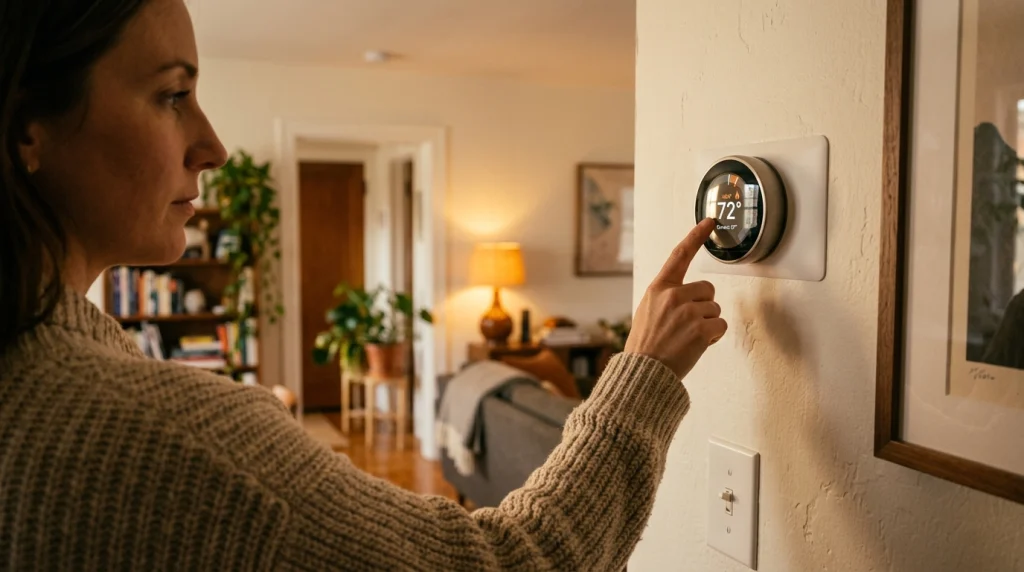
Switch it to HEAT and review any programmed temperature changes.
Around 68°F is a reasonable starting point while you’re home and awake, although comfort needs vary.
If you lower temperatures while sleeping or away, make sure your home remains warm enough to protect plumbing during freezing weather.
Have a heat pump? Large temperature setbacks may trigger auxiliary heating on some systems, so check the manufacturer’s recommendations.
6. Turn on the Heat and Pay Attention
This is one of the most important steps, and it’s worth doing before the first truly cold night.
Set your thermostat a few degrees above the current indoor temperature and let the heating system start.
You don’t need to know how every furnace component works. Just pay attention to whether the system behaves normally.
What’s Normal and What’s Worth Checking?
| What you notice | What it could mean |
| A few clicks during startup | Often normal as controls activate |
| A mild dusty smell that fades | Common during initial heating cycles |
| Repeated clicking without heat | Possible ignition or startup issue |
| Loud grinding or persistent banging | A problem requiring inspection |
| Furnace repeatedly starts and stops | Possible airflow, control, or other system issue |
If the system runs and your home begins warming normally, that’s reassuring.
However, if you smell gas, leave immediately and contact your gas utility or emergency services from outside. Don’t operate electrical switches or try to locate the leak.
7. Schedule Heating Maintenance Before Winter
A successful test run tells you the furnace can produce heat. It doesn’t tell you everything about its condition.
A professional heating maintenance visit can check safety controls, electrical components, burner operation, venting, and other areas homeowners shouldn’t inspect themselves.
This matters before Iowa’s colder months, when your furnace may be running regularly for extended periods.
If your system won’t start, makes concerning noises, or repeatedly shuts down, schedule a heating repair evaluation rather than waiting for routine maintenance.
Frequently Asked Questions
How long should I test my furnace before winter?
Let your furnace complete a normal heating cycle if possible. It should produce heat, approach the thermostat setting, and shut off normally. The time required varies by system and indoor conditions.
Why is my furnace blowing cool air when I first turn it on?
A brief delay before warm air arrives can be normal. However, if the furnace continues blowing cool air without heating your home, there may be an ignition, airflow, or equipment problem.
Should I close vents in rooms I’m not using?
Generally, no. Closing too many supply vents can disrupt airflow and increase pressure in the duct system. Keep vents open unless your system was specifically designed for zoning.
Can I use my furnace before its annual maintenance appointment?
Usually, yes, if the system is operating normally and there are no safety concerns. However, don’t continue operating equipment that shows signs of a gas leak, activates a CO alarm, or has another potentially dangerous problem.
Make Sure Your Heat Is Ready Before You Need It
That first chilly morning is much easier when you already know your heating system is working properly. A few simple checks can help you catch airflow problems, thermostat issues, or unusual furnace behavior while there’s still time to address them.
If something doesn’t seem right, you don’t have to figure it out alone. Lenz Heating & Cooling has helped Des Moines-area homeowners prepare for Iowa winters since 2009, providing straightforward advice and dependable heating service.
Ready to get your furnace winter-ready? Contact Lenz Heating & Cooling to schedule your heating maintenance or repair service.